

Emotional Debt: How Japan’s Host Culture Traps Young Women
In modern Japan, pressure is an inescapable part of daily life. Hobbies and passions that once offered joy or a brief escape from a bleak reality are increasingly being commodified. When emotional fulfillment is turned into something that can be bought and sold, freedom quietly disappears.
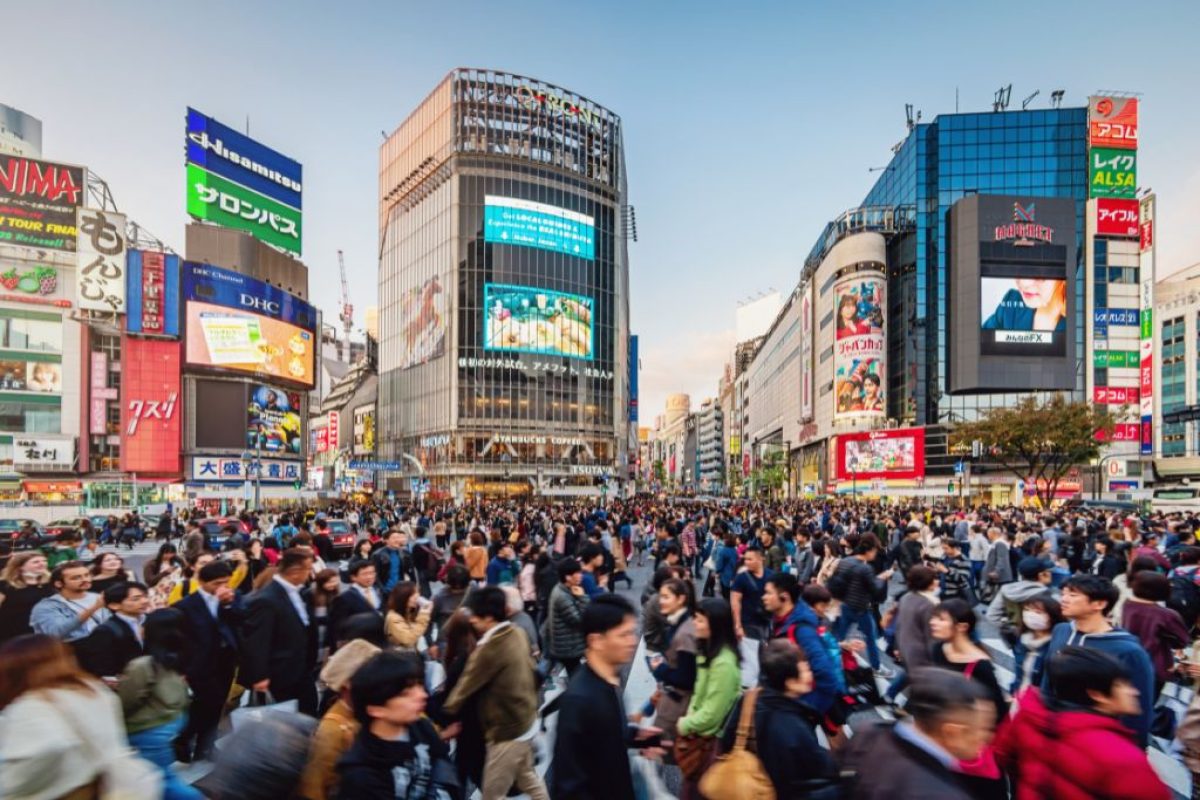
In recent years, growing attention has fallen on young Japanese women consumed by idol fandoms or host club culture—two industries built around selling emotional connection. What begins as entertainment often spirals into obsession and debt. Scholar Pan Nini argues that as emotional value increases, its marginal utility declines, eventually transforming affection and joy into compulsion and addiction.
The Price of Emotional Attachment
In May 2024, Japanese tabloids broke a scandal involving veteran anime voice actor Toru Furuya, who had an affair with a woman barely older than his daughter. The woman had long supported the 70-year-old actor—both emotionally and financially—out of devotion to a character he voiced.
Furuya is the voice behind several iconic anime heroes: Seiya from Saint Seiya, Tuxedo Mask from Sailor Moon, and Amuro Ray from Mobile Suit Gundam. But the role that reignited his fame—and his fan’s obsession—was Amuro Tooru from Detective Conan.

The woman spent lavishly on merchandise, event tickets, and front-row seats, and eventually entered into a personal relationship with him. What shocked the public most wasn’t just the affair, but what it revealed: an expanding crisis in which young women, and even minors, turn to sex work not merely out of poverty, but to fund their emotional consumption—purchasing affection, fantasy, and belonging.
The Shadow of Shinjuku: Toyoko Kids and Okubo Park
Nowhere is this social unease more visible than in Shinjuku, beneath the Godzilla-topped Toho Building. Here, the so-called Toyoko Kids—minors who gather near the entertainment district—seek refuge from loneliness.
Many are drawn by shared interests in fashion, subculture, or idols. But beneath this colorful surface lies despair. In 2021, an 18-year-old boy and a 14-year-old girl leapt from a rooftop after taking hallucinogenic drugs—an incident that exposed the darkness of their world.

Most troubling, however, is the quiet normalization of underage sexual solicitation. Amid the neon lights of Kabukicho’s nightlife, some girls approach intoxicated office workers for money. For many runaways, this district feels like both sanctuary and trap—offering fleeting companionship but demanding constant survival.
Even when police or charities intervene, many return. The streets offer something that home and school do not: a space without judgment, where they feel seen, even if only superficially.

A few blocks away lies Okubo Park, another symbol of this gray reality. Though prostitution has been banned in Japan since the postwar era, “gray zones” persist. Okubo Park, bordering Kabukicho, attracts office workers, students, and foreign laborers—and now, an increasing number of young women, some suspected to be minors.
Journalists from Bungeishunjū described scenes of women dressed in the trendy jirai-kei (landmine-style) fashion, standing a few meters apart and quietly messaging online:
“I’m at the park now. Can someone meet me?”
These posts, seemingly innocent, often carry coded invitations for transactional encounters. What disturbs authorities most is not just the act itself, but how such interactions blur into Japan’s subculture, becoming yet another spectacle for social media voyeurs.
Host Clubs and the Machinery of Manufactured Desire
When social workers and journalists interview women involved in this world, two patterns emerge. Some are genuinely impoverished, lacking support or stability. Others, however, engage in sex work primarily to fund their emotional consumption—spending extravagantly on male hosts.
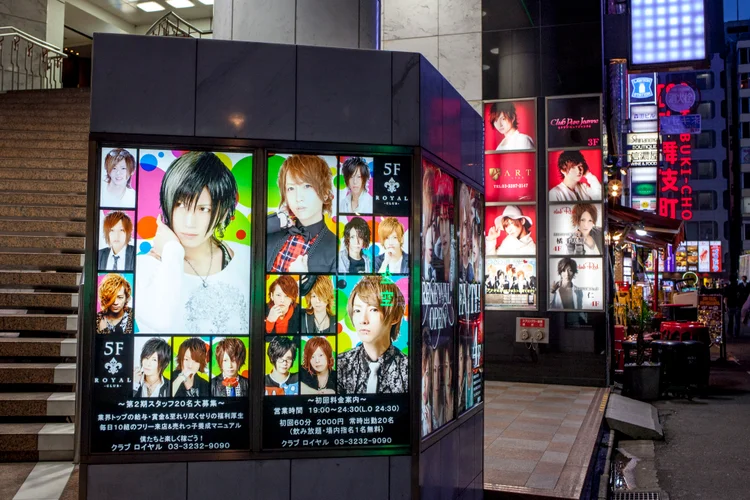
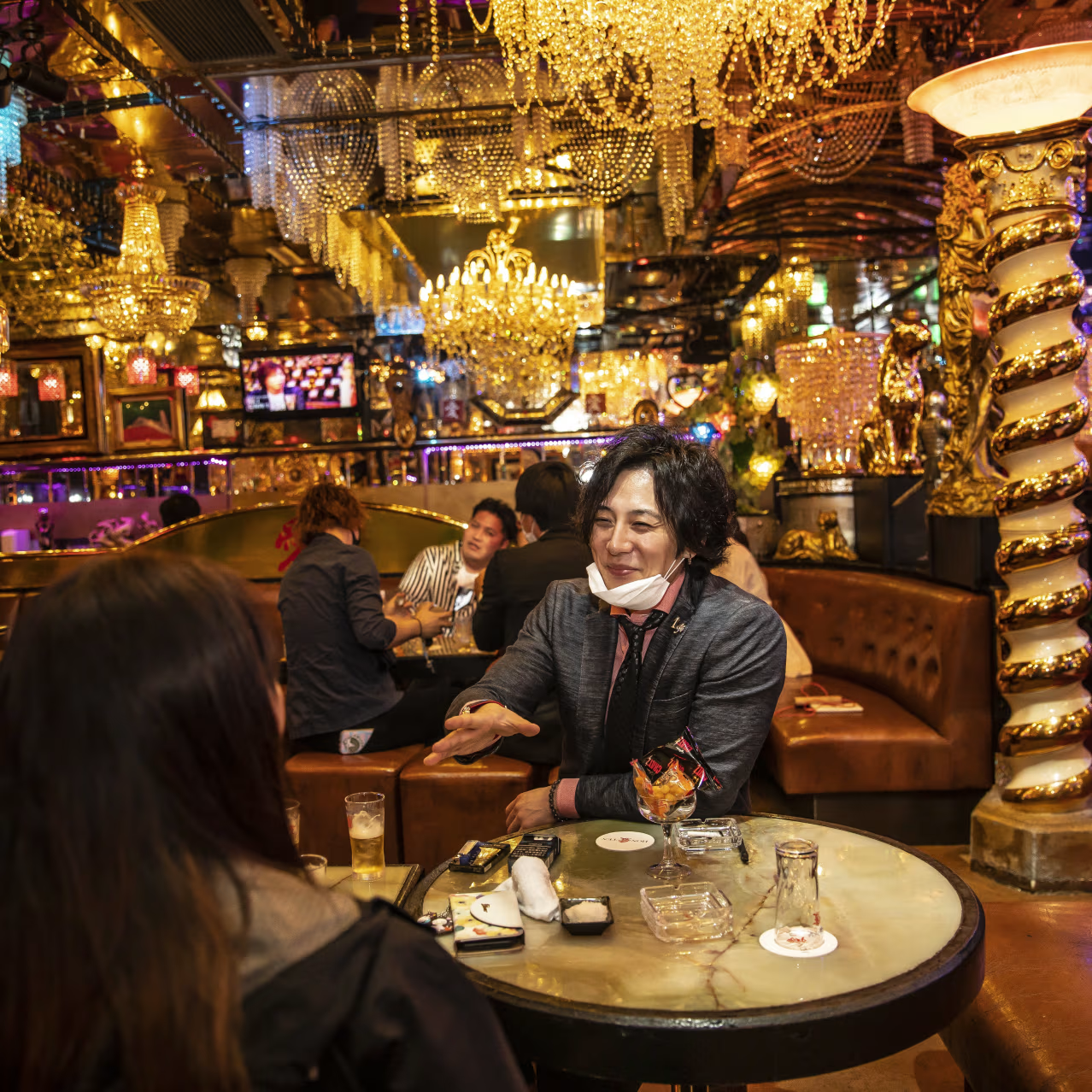
Host clubs flourished during Japan’s bubble economy, when wealthy office ladies and housewives could purchase affection. But after decades of stagnation, that clientele has dwindled. Meanwhile, more men—drawn by the promise of quick cash—have entered the business. The competition is brutal.
To survive, many hosts manipulate emotions, coaxing clients into excessive spending. When bills pile up, women are urged to take out loans—and sometimes, to sell their bodies to repay them.
Between January and April 2024, police arrested 22 hosts for exploitative behavior. The Ministry of Health responded with a victim hotline, and lawmakers proposed new regulations requiring clubs to self-monitor client debt levels. Yet these measures lack enforcement. No spending limits exist, and the emotional coercion at the heart of host culture remains untouched.
Freedom Without Security: Japan’s Forgotten Lower Class
Why, critics ask, do so many young women sacrifice so much for fleeting affection? Online debates often devolve into culture wars—between conservatives blaming Western permissiveness and progressives decrying patriarchy.
But beneath both arguments lies a harsher truth: many of these women appear free but live without social security. They belong to Japan’s growing underclass, born from the nation’s prolonged economic stagnation—its so-called Lost Thirty Years.

Despite rising female labor participation—women make up 44% of Japan’s workforce—inequality persists. Millions work part-time or in unstable jobs, especially in nursing, retail, and logistics. For many, emotional consumption becomes the only accessible form of “freedom.”
Japan’s feminist movement once flourished, particularly in the 1960s and 1970s. Housewives formed communities, protested wars, and fought for equality. But those movements were largely middle-class revolutions, inaccessible to poorer, isolated women. Working-class women—the “Gian’s mothers” of society, to borrow a metaphor from Doraemon—were quietly left behind.

Even academic feminism, rich in theory, rarely reached women without the material means for self-liberation. Thus, postwar Japan addressed gender inequality in principle but failed to uplift women with the least privilege.
The Birth of the ‘Princess Dream’
During Japan’s boom years, entertainment offered easy joy. Television filled homes, and idol culture emerged as an industry catering directly to women—particularly those of modest means.
A small company named Johnny & Associates discovered this untapped audience in the 1960s: women who couldn’t afford luxury, but would eagerly spend on emotional intimacy. They created androgynous, approachable male idols—the perfect “princes” for every “ordinary princess.”

The formula worked beyond imagination. Soon, nearly every entertainment company followed, transforming women’s affection into an industrial commodity. Parents indulged daughters in these fantasies; marketers refined them. Over time, emotional dependence was built into womanhood itself.
From childhood Disney dreams to teenage anime crushes, from 2D voice actors to 3D hosts, the “princess dream” evolved seamlessly. Each stage reinforced the same message: love can be purchased, fantasy is safer than reality, and striving isn’t necessary—just keep believing, and keep buying.
The Trap of Emotional Capitalism
When economic hardship deepened after the bubble burst, these fantasies offered temporary comfort. But comfort turned into consumption, and consumption into addiction.
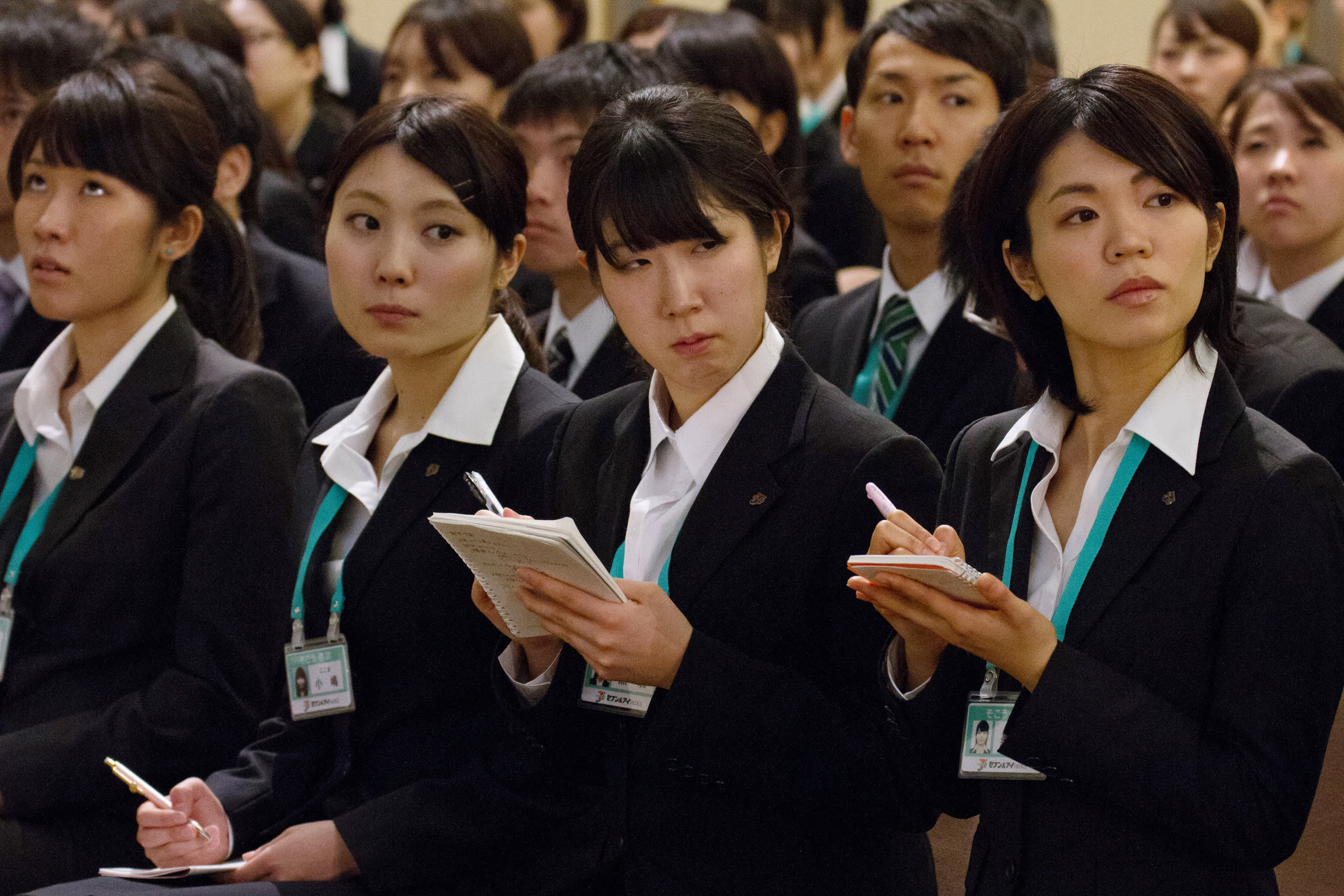
For women in Japan’s lower class—those juggling part-time jobs and emotional exhaustion—idol culture and host clubs filled the void left by a society that promised equality but delivered precarity.
Today, the pursuit of “emotional value” has become its own form of debt. The freer one seems, the more tightly bound one becomes to industries that monetize emotion itself.
Hobbies and passions are essential to life. They give meaning and joy. But Japan’s “emotional debtors” reveal a darker side of freedom: when desire is endlessly fed by commerce, the power to choose slowly erodes. To stay truly free, one must sometimes step back from the very pleasures that promise escape.
Final Thoughts
The story of Japan’s emotional debtors is not simply about obsession or gender—it is a reflection of a society that commodifies connection.
As emotional consumption replaces real community and economic stability fades, the boundary between love and transaction vanishes.
What remains is not freedom, but a gentle, glittering kind of captivity.
Related Articles


You may also like...




International Hostess Bar Since 1993
夢
ORIGIN
・ International Hostess Bar since 1993
・ Japanese Hospitality with International Service
・ Diverse and Charming Floor Ladies
・Located in Shinjuku, Tokyo
・Transparent Pricing
・Easy Online Reservations






-Aug-03-2024-02-44-14-8188-AM.webp)


