Steam, Skin, and a Very Old Idea
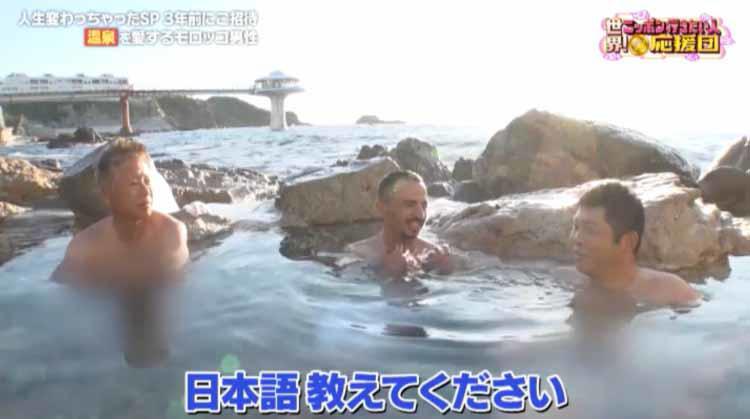
There is a particular kind of courage required to undress completely in front of strangers. To fold your clothes, set aside every social armour you have ever worn, and lower yourself into a pool of steaming mineral water alongside people you have never met — this is the demand that every Japanese onsen makes of its guests, without exception or compromise. But for most of Japanese history, the ritual asked something further still: that men and women do all of this together, in the same water, at the same time, without a word of ceremony or apology.

This was konyoku (混浴) — mixed bathing — and it was not a scandal. It was simply life.
Remarkably, Japan was not alone in this. The ancient Romans, architects of the most sophisticated bathing culture the Western world had ever seen, were perfectly comfortable with men and women sharing the same pool. The great thermae of Rome were not segregated spaces — they were civic institutions where senators and soldiers, merchants and matrons, mingled freely in the warm water. The idea that nudity and social order were incompatible was, for most of human history, considered an overreaction. It took a particular strain of modern morality to make the naked body a problem.
In Japan, that problem arrived from abroad. And it arrived with consequences that are still being felt today.
A Thousand Years in the Water — The Roots of Konyoku
To understand konyoku, one must first understand Japan's peculiar geological fortune. The archipelago sits atop one of the most volcanically active regions on earth — a chain of fire that has, as its consolation prize, scattered thousands of natural hot springs across every mountain range and valley. Japan is, in the truest sense, a hot spring nation. Folklorist Shimokawa Koji, who devoted an entire book — Konyoku to Nihonshi ("Mixed Bathing and Japanese History") — to this very subject, argued that the onsen became so central to ancient Japanese daily life precisely because it was unavoidable. Men, women, children, the elderly: everyone bathed together because the spring did not discriminate, and neither did the people who used it.

In the Heian period and beyond, bathing carried explicit spiritual significance. Buddhist temples and powerful daimyo — feudal lords — would open their private pools to commoners as acts of religious merit. To bathe in the waters of a great lord's estate was not a luxury; it was a blessing. The nudity involved was incidental, morally neutral, unremarkable. Records of konyoku onsen trace back at least to the 9th century, though scholars widely agree the practice predates any written account.
What the onsen created, over centuries, was something the Japanese would eventually give a name: hadaka no tsukiai — "naked communion." The idea was elegant in its simplicity. When rank, wealth, clothing and title are all left at the changing room door, what remains is just a person. The bathhouse was the great equaliser — the one place in a rigidly hierarchical society where a farmer could sit beside a samurai and both would be, for that hour, simply human.
The Foreigners Arrive — And They Are Not Pleased
The first recorded foreign reactions to Japanese mixed bathing range from the bewildered to the outraged, and they make for entertaining reading.
Portuguese missionary Luís Fróis, writing over four hundred years ago in his comparative study Tratado — later compiled as Europa Japan Cultural Comparisons — noted with evident surprise: "We Europeans bathe indoors, away from others. In Japan, men and women — even Buddhist monks — bathe together in public bathhouses. They also wash at their doorsteps at night." The tone of a man who has seen too much, and cannot quite explain what he has seen, is unmistakable.
A Korean diplomatic envoy from the same era, Hwang Sin, recorded in his Diary of Travel to and from Japan: "The custom favours bathing, which is not abandoned even in the depths of winter. Along the streets, bathhouses are set up to collect fees. Men and women mingle together, their bodies exposed, familiar with one another, and without shame." The summary judgement — shameful — was delivered with the confidence of a man who had never questioned whether shame was the appropriate response.
But it was the Americans who did the most lasting damage to konyoku's reputation. When Commodore Matthew Perry — the man whose "black ships" forced Japan to open its ports in 1853 — visited a public bathhouse, the sight of men and women bathing together in cheerful, unself-conscious nudity reportedly left him appalled. In his published account, Narrative of the Expedition of an American Squadron to the China Seas and Japan, he questioned the moral character of the city's residents outright. His accompanying artists sketched the scene for publication back home — and those sketches circulated through the "civilised world" for years, casting Japan as a place of exotic impropriety at the precise moment it was attempting to modernise.
The irony is almost too rich. Perry arrived from a country that was still, at that exact moment, debating whether men and women could swim in the same ocean — wearing full clothing. The nation that would spend the 19th century moralising about Japanese nudity was itself barely past the era of ankle-length swimsuits and gender-segregated beaches. Yet here was Perry, pen in hand, rendering his verdict on Japanese civilisation.
Banned, Defied, and Banned Again — The Long War Against the Bath
The pressure was not merely social. It became legal.
The campaign against konyoku began well before Western opinion hardened against it. As early as 1791, the Edo-period daimyo Matsudaira Sadanobu — a man renowned for his moral reformism — issued a formal proclamation banning adult mixed bathing. His reasoning was practical as much as puritanical: bathhouse records from the era noted that in dimly lit communal pools, illicit encounters had become something of a routine occurrence. Urban troublemakers used the bathhouses for harassment. Venereal disease was spreading quietly. Even the influence of Neo-Confucian thought, filtering in from the continent, had begun to make communal nudity feel philosophically uncomfortable to the educated class.
Sadanobu's ban, however, outlasted him by only slightly. He left office; the ban faded; the bathing continued. It was, in many ways, a preview of what was to come.

The Meiji Restoration of 1868 changed everything in Japan — the economy, the military, the calendar, the alphabet, the cuisine, the clothing — and it changed konyoku too. The new government, acutely aware of how Japan appeared to Western observers, issued repeated orders banning mixed bathing over consecutive years. The baths, largely, ignored them. For three decades, the decrees accumulated while the bathers carried on regardless.
Then, on 24 May 1900, the Meiji Emperor himself intervened with a formal imperial edict that had real teeth. The law was specific: mixed bathing was prohibited for anyone aged 12 or older. Any establishment caught allowing it faced a fine of up to 25 yen — a sum equivalent, in today's terms, to roughly 500,000 Japanese yen. To contextualise the severity: 25 yen represented the combined daily revenue of approximately 2,500 customers. Running a mixed bath had become, legally speaking, more financially ruinous than selling counterfeit goods. Enforcement was delegated to local police departments, who were instructed to pursue violations with corresponding seriousness.
The law worked — in the cities. In the mountains, in the remote valleys, in the small villages where the spring bubbled up from the earth and the nearest police officer was a day's walk away, things continued much as they always had.
Fighting Back — The Defenders of Konyoku
Not everyone accepted the premise that mixed bathing was something to be ashamed of. Japan's cultural establishment pushed back — sometimes eloquently, sometimes with genuine fury.
The novelist Mishima Yukio, one of the defining literary voices of 20th-century Japan, saw the campaign against konyoku as a symptom of a far deeper and more dangerous pathology: the wholesale abandonment of Japanese identity in pursuit of Western approval. His critique was sweeping and unsparing:
"Everything that Westerners find tedious, abolish it. Everything that Westerners find primitive, strange, ugly, or immoral — abolish it all. This is the doctrine of civilisation and enlightenment. If we abolish浪花節 because Westerners think it low-class, if we reject seppuku as barbaric and Shintō as simplistic — if we deny all of these things, what is left of Japan? Nothing."

Konyoku, in Mishima's formulation, was not merely a bathing custom. It was a synecdoche for Japanese civilisation itself — one thread in a fabric that, once pulled, would unravel the rest. The fact that Western observers found it strange was, to him, not a reason to abandon it but a reason to defend it with greater conviction.
The argument resonated. Japan had, after all, not invented shame about the body — it had imported it. The naked bath had existed for over a millennium without generating the kind of social dysfunction that its critics predicted. The problems that did arise — harassment, exploitation — were problems of human behaviour, not of nudity itself.
In the face of legislation, popular opinion, and international pressure, a core of Japanese bathers, innkeepers, and cultural advocates held their ground. And because of them, the tradition survived.
Waning Waters, Lasting Rituals — Konyoku Today
The survival, however, has come at a cost. Where once thousands of mixed baths dotted the Japanese countryside, the numbers have fallen with each passing decade. From approximately 1,200 mixed-gender onsen in the 1990s, the count dropped to around 700 by the early 2000s, and further estimates suggest fewer than 500 remain today — a decline of over 40 per cent in a single generation.
The reasons are layered. Changing values among younger generations have played a role. Legal regulations in many prefectures now prohibit mixed bathing for anyone over the age of ten. The ageing of ryokan owners — many of whom are the last of their family lines to run these establishments — has meant that when they retire, the baths close rather than transfer. And then there is the wani.
The word means "crocodile." In onsen culture, it refers to the men — and occasionally women — who enter a mixed bath not for the water's warmth but for something far less defensible: they submerge themselves to the shoulders and wait, motionless and patient, for other bathers to arrive. Half-submerged, predatory, ruining the atmosphere for everyone. The presence of wani has driven women away from konyoku in significant numbers, and their absence has, in turn, accelerated the closure of facilities. It is a self-fulfilling extinction — bad behaviour poisoning the very tradition it parasitises.
Modern konyoku facilities have adapted. Many now allow women to wear yuami-gi — traditional bathing dresses — or rental towels. Some feature separate entry paths that allow women to enter the shared pool already submerged, preserving their privacy until the water itself provides cover. Others use the natural opacity of the mineral water — the famous milky-white nigori-yu — as a visual screen that renders the body indistinct below the surface.
For those willing to seek them out, the remaining temples of this ancient tradition are extraordinary. Sukayu Onsen in Aomori Prefecture, deep in the volcanic Hakkoda Mountains, houses the legendary Sennin-buro — the "thousand-person bath" — a cathedral of steam and cedar that has practised konyoku without interruption for centuries. Tsuru-no-Yu in Akita's Nyuto Onsen village offers a milky outdoor rotenburo where, in deep winter, guests sit in water the colour of jade surrounded by walls of snow, the silence broken only by the sound of the spring itself. Takaragawa Onsen in Gunma boasts some of the largest outdoor mixed baths in the country, set beside a rushing mountain river, with the occasional rustle in the forest suggesting that the local wildlife considers the whole arrangement perfectly natural.
Today, an estimated 100 facilities still offer genuinely mixed-gender bathing in Japan. Advocacy groups and the owners of surviving establishments have fought hard against total prohibition, arguing — as Mishima argued, as cultural historians argue — that to erase konyoku completely would be to erase something irreplaceable from the living record of what Japan is. It would be, to borrow Mishima's logic, to subtract yet another thread from an already thinning fabric.
Whether the tradition survives another generation depends on whether enough people — Japanese and foreign alike — choose to step into the water rather than stand at the edge, judging it. For over a thousand years, the answer was obvious. The spring was there. The water was warm. What else was there to decide?
Related Articles
You may also like...


International Hostess Bar Since 1993
夢
ORIGIN
・ International Hostess Bar since 1993
・ Japanese Hospitality with International Service
・ Diverse and Charming Floor Ladies
・Located in Shinjuku, Tokyo
・Transparent Pricing
・Easy Online Reservations